


Collars and Leads
-
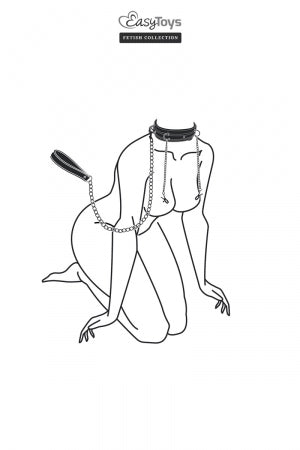
Leather collar with leash and nipple clamps EasyToys Fetish Collection
Vendor:EasyToys- Lined faux leather
- Detachable lead
Regular price 56,90 €Regular price0,00 €Sale price 56,90 € -
Leather collar, handcuffs and chains set Fetish Tentation
Vendor:Fetish Tentation- Metal ring
- For beginners
Regular price 47,90 €Regular price0,00 €Sale price 47,90 € -
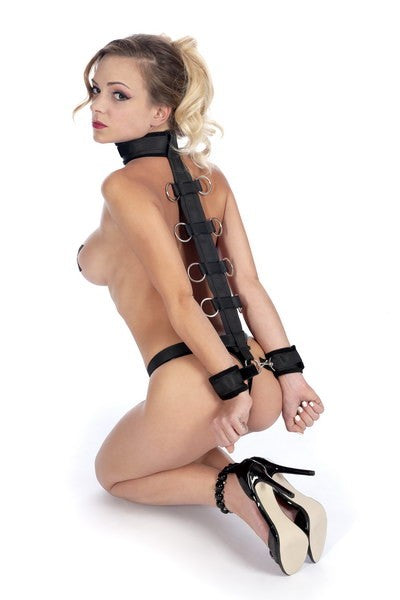
Adjustable neck and wrist restraint harness Fetish Tentation
Vendor:Fetish Tentation- Soft lining
- Over a bodysuit
Regular price 45,50 €Regular price0,00 €Sale price 45,50 € -
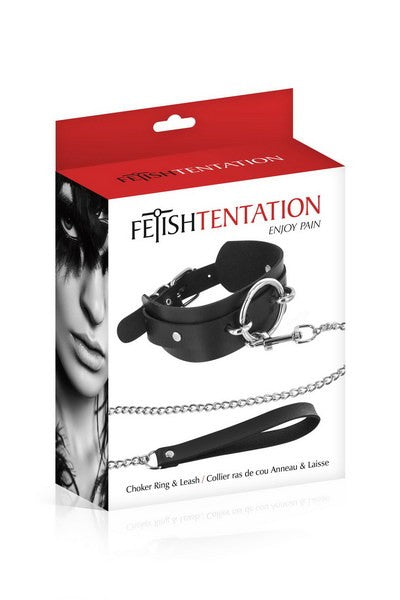
Microfibre collar with ring and leash Fetish Tentation
Vendor:Fetish Tentation- Adjustable buckle
- Together
Regular price 29,90 €Regular price0,00 €Sale price 29,90 €Sold out -
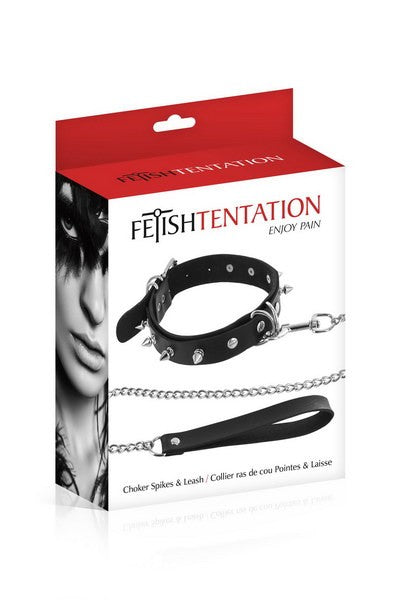
Collar with 8 metal spikes and leash Fetish Tentation
Vendor:Fetish Tentation- Lined faux leather
- Together
-23 %Regular price 21,90 €Regular price28,50 €Sale price 21,90 €-23 % -
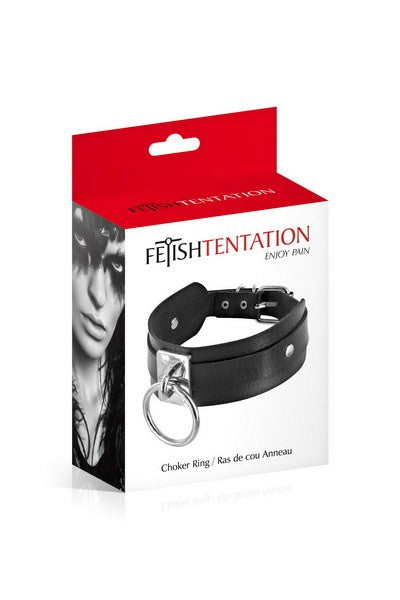
Wide black collar with ring Fetish Tentation
Vendor:Fetish Tentation- Wide strap
- Matching
Regular price 22,50 €Regular price0,00 €Sale price 22,50 € -
Metal studded fetish collar Dreamy Fetish
Vendor:Dreamy Fetish- Soft leather
- Symbolic wear
Regular price 9,90 €Regular price0,00 €Sale price 9,90 € -
Adjustable BDSM collar with metal detail Dreamy Fetish
Vendor:Dreamy Fetish- Metal ring
- Matching
Regular price 9,90 €Regular price0,00 €Sale price 9,90 € -
Black lace choker with adjustable chain Cottelli
Vendor:Cottelli- Soft lining
- Together
Regular price 19,90 €Regular price0,00 €Sale price 19,90 € -
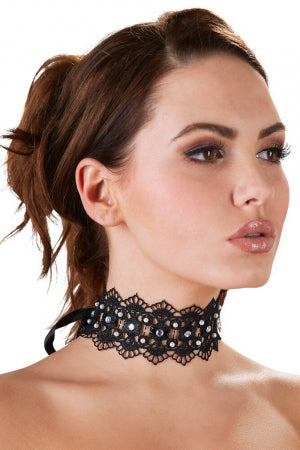
Embroidered choker with pearls, rhinestones and satin bow Cottelli
Vendor:Cottelli- Wide strap
- Matching
Regular price 11,90 €Regular price0,00 €Sale price 11,90 € -
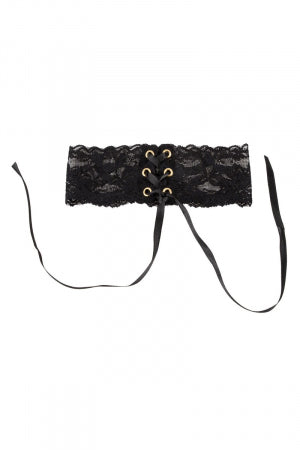
Laced black lace ribbon choker Cottelli
Vendor:Cottelli- Lined faux leather
- Symbolic wear
Regular price 11,90 €Regular price0,00 €Sale price 11,90 € -
Leather choker black with 3 rows of chains The Sinners
Vendor:The Sinners- 3 rows
- Genuine leather
In stock, ships within 24 hoursRegular price 52,90 €Regular price0,00 €Sale price 52,90 € -
Steel chain leash 120 cm with leather handle black The Sinners
Vendor:The Sinners- 120 cm
- Steel chain
Regular price 24,90 €Regular price0,00 €Sale price 24,90 €Sold out -
Lockable studded leather choker red The Sinners
Vendor:The Sinners- 6 notches
- Lockable
In stock, ships within 24 hoursRegular price 39,90 €Regular price0,00 €Sale price 39,90 € -
Lockable studded leather choker black The Sinners
Vendor:The Sinners- 6 notches
- Lockable
In stock, ships within 24 hoursRegular price 39,90 €Regular price0,00 €Sale price 39,90 € -
Thick leather leash red 75 cm with snap hook The Sinners
Vendor:The Sinners- 75 cm
- Thick leather
In stock, ships within 24 hoursRegular price 27,90 €Regular price0,00 €Sale price 27,90 € -
Thick leather leash black 75 cm with snap hook The Sinners
Vendor:The Sinners- 75 cm
- Thick leather
In stock, ships within 24 hoursRegular price 27,90 €Regular price0,00 €Sale price 27,90 € -
Short thick leather leash red 45 cm The Sinners
Vendor:The Sinners- 45 cm
- Thick leather
In stock, ships within 24 hoursRegular price 18,90 €Regular price0,00 €Sale price 18,90 € -
Short thick leather leash black 45 cm The Sinners
Vendor:The Sinners- 45 cm
- Thick leather
In stock, ships within 24 hoursRegular price 18,90 €Regular price0,00 €Sale price 18,90 € -
Steel chain leash 120 cm with leather handle red The Sinners
Vendor:The Sinners- 120 cm
- Steel chain
In stock, ships within 24 hoursRegular price 24,90 €Regular price0,00 €Sale price 24,90 € -
Black latex collar with Slut lettering Master Series
Vendor:LollyDoll- Lined faux leather
- Detachable lead
Regular price 19,90 €Regular price0,00 €Sale price 19,90 € -
Leather choker red with 3 rows of chains The Sinners
Vendor:The Sinners- 3 rows
- Genuine leather
In stock, ships within 24 hoursRegular price 52,90 €Regular price0,00 €Sale price 52,90 € -
Rigid leather choker black with gold chain The Sinners
Vendor:The Sinners- Rigid leather
- Gold chain
In stock, ships within 24 hoursRegular price 56,90 €Regular price0,00 €Sale price 56,90 € -
Rigid leather choker black with silver chain The Sinners
Vendor:The Sinners- Rigid leather
- Silver chain
Regular price 51,90 €Regular price0,00 €Sale price 51,90 €Sold out -
Slim leather choker black with gold ring The Sinners
Vendor:The Sinners- End
- Smooth edges
In stock, ships within 24 hoursRegular price 37,90 €Regular price0,00 €Sale price 37,90 € -
Slim leather choker red with silver ring The Sinners
Vendor:The Sinners- End
- Smooth edges
Regular price 34,90 €Regular price0,00 €Sale price 34,90 €Sold out -
Slim leather choker black with silver ring The Sinners
Vendor:The Sinners- End
- Smooth edges
In stock, ships within 24 hoursRegular price 34,90 €Regular price0,00 €Sale price 34,90 € -
Leather collar and handcuffs set black with gold chain The Sinners
Vendor:The Sinners- Removable chain
- Leather and steel
In stock, ships within 24 hoursRegular price 99,90 €Regular price0,00 €Sale price 99,90 € -
Leather collar and handcuffs set red with silver chain The Sinners
Vendor:The Sinners- Removable chain
- Leather and steel
In stock, ships within 24 hoursRegular price 72,90 €Regular price0,00 €Sale price 72,90 € -
Leather collar and handcuffs set black with silver chain The Sinners
Vendor:The Sinners- Removable chain
- Leather and steel
In stock, ships within 24 hoursRegular price 72,90 €Regular price0,00 €Sale price 72,90 € -
Cut-out leather collar red with 3 press studs The Sinners
Vendor:The Sinners- Openwork
- 3 levels
In stock, ships within 24 hoursRegular price 28,90 €Regular price0,00 €Sale price 28,90 € -
Cut-out leather collar black with 3 press studs The Sinners
Vendor:The Sinners- Openwork
- 3 levels
Regular price 28,90 €Regular price0,00 €Sale price 28,90 €Sold out -
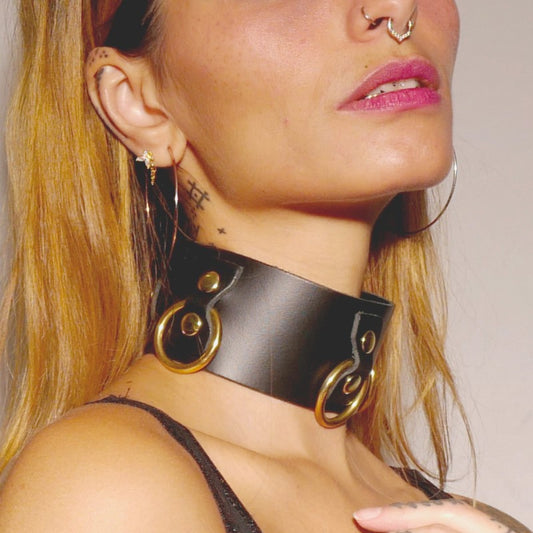
Wide black leather collar with 3 gold rings The Sinners
Vendor:The Sinners- 3 rings
- Wide leather
In stock, ships within 24 hoursRegular price 61,90 €Regular price0,00 €Sale price 61,90 € -
Wide red leather collar with 3 steel rings The Sinners
Vendor:The Sinners- 3 rings
- Wide leather
In stock, ships within 24 hoursRegular price 27,90 €Regular price0,00 €Sale price 27,90 € -
Wide black leather collar with 3 steel rings The Sinners
Vendor:The Sinners- 3 rings
- Wide leather
Regular price 27,90 €Regular price0,00 €Sale price 27,90 €Sold out -
Braided leather choker red with steel ring The Sinners
Vendor:The Sinners- Braided leather
- Steel ring
In stock, ships within 24 hoursRegular price 43,90 €Regular price0,00 €Sale price 43,90 € -
Braided leather choker black with steel ring The Sinners
Vendor:The Sinners- Braided leather
- Steel ring
In stock, ships within 24 hoursRegular price 43,90 €Regular price0,00 €Sale price 43,90 € -
Padded leather collar black with gold hardware The Sinners
Vendor:The Sinners- Fleece-lined
- Gold-tone hardware
In stock, ships within 24 hoursRegular price 56,90 €Regular price0,00 €Sale price 56,90 € -
Padded leather collar black with gold-finish hardware The Sinners
Vendor:The Sinners- Fleece-lined
- Gold clasps
In stock, ships within 24 hoursRegular price 75,90 €Regular price0,00 €Sale price 75,90 € -
Padded leather collar red with silver hardware The Sinners
Vendor:The Sinners- Fleece-lined
- Silver fasteners
In stock, ships within 24 hoursRegular price 51,90 €Regular price0,00 €Sale price 51,90 € -
Padded leather collar black with silver hardware The Sinners
Vendor:The Sinners- Fleece-lined
- Silver fasteners
In stock, ships within 24 hoursRegular price 51,90 €Regular price0,00 €Sale price 51,90 € -
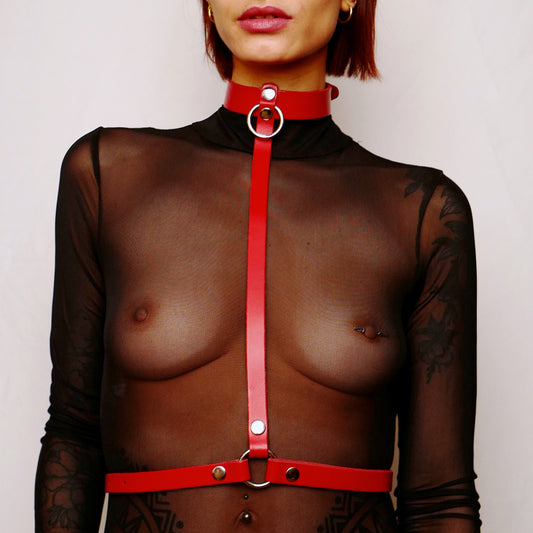
Red leather chest harness with silver-tone fittings The Sinners
Vendor:The Sinners- Elastic straps
- Matching
Regular price 60,50 €Regular price0,00 €Sale price 60,50 € -
Black leather chest harness with silver-tone fittings The Sinners
Vendor:The Sinners- Soft leather
- Together
Regular price 60,50 €Regular price0,00 €Sale price 60,50 € -
Black leather chest harness with belt The Sinners
Vendor:The Sinners- Wide straps
- Bare-skin look
Regular price 86,90 €Regular price0,00 €Sale price 86,90 €Sold out -
Full-body harness in red leather The Sinners
Vendor:The Sinners- Soft lining
- Bare-skin look
Regular price 120,50 €Regular price0,00 €Sale price 120,50 € -
Full-body harness in black leather The Sinners
Vendor:The Sinners- Metal buckles
- Guided discovery
Regular price 120,50 €Regular price0,00 €Sale price 120,50 € -
Gold leather and chain chest harness The Sinners
Vendor:The Sinners- Wide straps
- Guided discovery
Regular price 153,90 €Regular price0,00 €Sale price 153,90 € -
Red leather and chain chest harness The Sinners
Vendor:The Sinners- Metal buckles
- Guided discovery
Regular price 98,50 €Regular price0,00 €Sale price 98,50 €























Choosing the right collar and leash
The collar identifies the role, the leash makes it visible. Safety depends entirely on how it is removed.
Width
A wide collar spreads the pressure and stays comfortable for longer.
The fastening
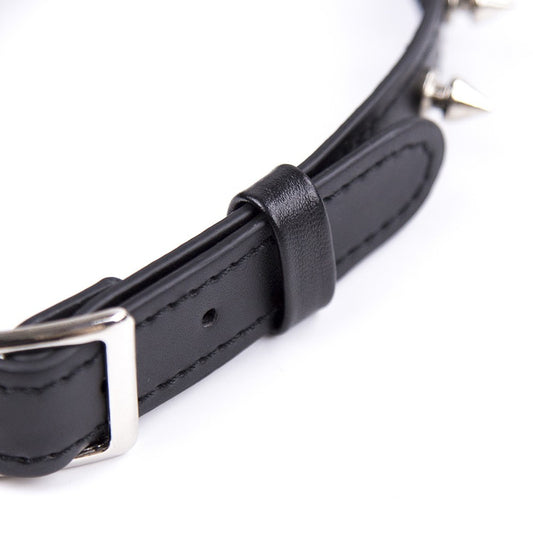
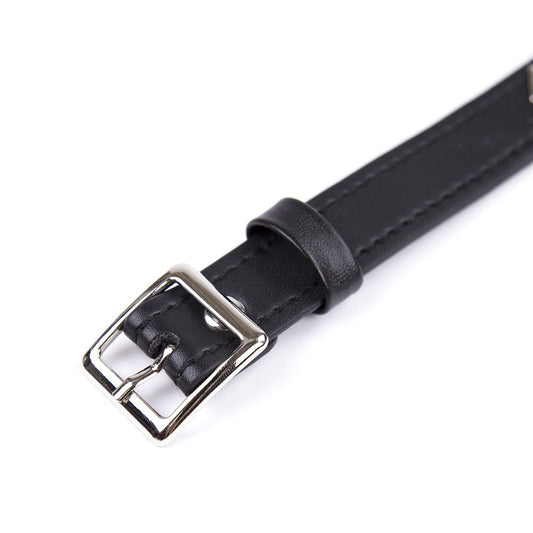
A buckle or quick-release clip. Never a fastening that can jam.
Fit
Two fingers should fit between the collar and the neck. Always.
The lead
Detachable, and never left unsupervised once attached.

A necklace is not meant to hold something back. It is meant to say something without having to say it.
Never. Two fingers should fit between the neck and the collar. Avoid models that tighten under tension altogether.
No, never unsupervised, not even for a few seconds. It's the strictest rule in the whole category.
A collar signals a role, a harness dresses the whole body. For real restraint, cuffs and straps are what you need.


